Vol. 9 No. 1 (2016): IJABE
Editor's Notes by Wang Yingkuan
This issue includes 17 good papers, which is featured with two invited review articles. The first review article presents an overview on the hot topics of Carbon Capture and Storage/Sequestration (CCS). CCS is the process of capturing waste carbon dioxide (CO2) from large point sources, such as fossil fuel power plants, transporting it to a storage site, and depositing it where it will not enter the atmosphere, normally an underground geological formation. The main objective is to prevent the release of large quantities of CO2 into the atmosphere from fossil fuel use in power generation and other industries. It is a potential means of mitigating the contribution of fossil fuel emissions to global warming and ocean acidification. The US Supreme Court on Tuesday (WASHINGTON, Feb. 9, 2016, Reuters) ruled against the Obama's proposal to implement Clean Power Plan and to ban the use of coal for US power plants. The plan was designed to lower carbon emissions from US power plants by 2030 to 32 percent below 2005 levels. This will surely place more attention on CCS to limit release of CO2 to the atmosphere. Therefore, it is a good time and very important to publish a good review article on CCS, which provides an overview of the roles of agriculture and soils in carbon capture and storage. Carbon sequestration in soils is the process of transferring CO2 from the atmosphere into soils through crop residues. It is a Win-Win-Win strategy―advancing food security, improving the environment, and mitigating global warming. Research has shown the same increase in yields of trees and field crops with higher CO2 concentrations. I recommend you read this article because it presents useful basis and references for further investigation and discussion. Another interesting research article by Liu Heman, et al provides the experimental results on soil organic carbon and nitrogen in farmland and grassland in Tibet, providing a good example of CCS.
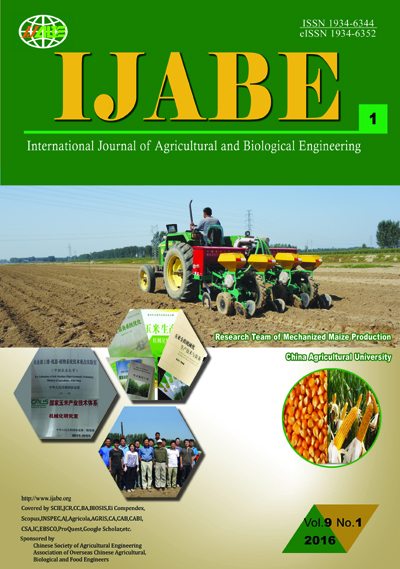
The second invited review article provides a global overview of research progress and development of precision maize planters. The paper summarizes the precision maize planters currently available in the world and classifies them into four types: precision planters for tilled-land, minimum/no tilled-land, hilly & small land, and cold & arid land. Detailed characteristics and comparisons have been provided for some typical precision planters with colorful pictures and parameters. It also analyzes the developing trend and suggestions for precision planting technology.
I strongly recommend the two review articles in this issue because they presents useful basis and references for further investigation and discussion. I wish you like them and enjoy reading!
Published:
2016-02-03
